

Baby Room Rugs: Safer, Softer Options for a Nursery Floor
There is a particular moment when you realise the nursery floor has become part of the baby gear. Your little one has rolled off the play blanket, found the cold patch of floorboards and is determined to get there again. Baby room rugs are soft floor coverings used in nurseries to make everyday floor time more comfortable, define a play area and add warmth to hard flooring. They can be a traditional rug, a cushioned floor mat or another soft layer, but the right choice depends on how your baby actually uses the room.
For the newborn months, it may simply be somewhere pleasant to sit during feeds. Later, it becomes the landing spot for tummy time, crawling, nappy-free wriggles and those very wobbly first attempts at pulling up. If you are deciding between a rug and a mat, our baby floor mat guide is a helpful next read.
What a nursery rug actually does
A baby room rug does more than fill an empty patch beside the cot. It gives you a softer place to sit with your baby, makes a tiled or timber room feel less chilly underfoot, and marks out a little zone for play in a room that also needs to hold nappies, laundry and approximately seventeen tiny socks.
It is not safety equipment, and no rug or mat can replace close supervision. It can, however, make the floor a more inviting place for everyday movement and connection.
A softer place for floor time
Babies spend a surprising amount of time close to the ground. In the early months, you may be lying beside them singing the same song repeatedly. Once crawling begins, the floor becomes their favourite route to absolutely everywhere.
A clearer play zone
In a compact apartment or a shared bedroom, a rug can quietly say, “this is our little spot”. That can make it easier to keep books, a play gym and a small basket of toys together, rather than spreading through the whole home before breakfast.
A warmer-looking room
Hard flooring is practical, especially during the nappy years, but a soft surface can take the echo and chill out of a nursery. A nursery rug can also help you choose a shape and placement that still works once the cot becomes a toddler bed.
The floor underneath matters
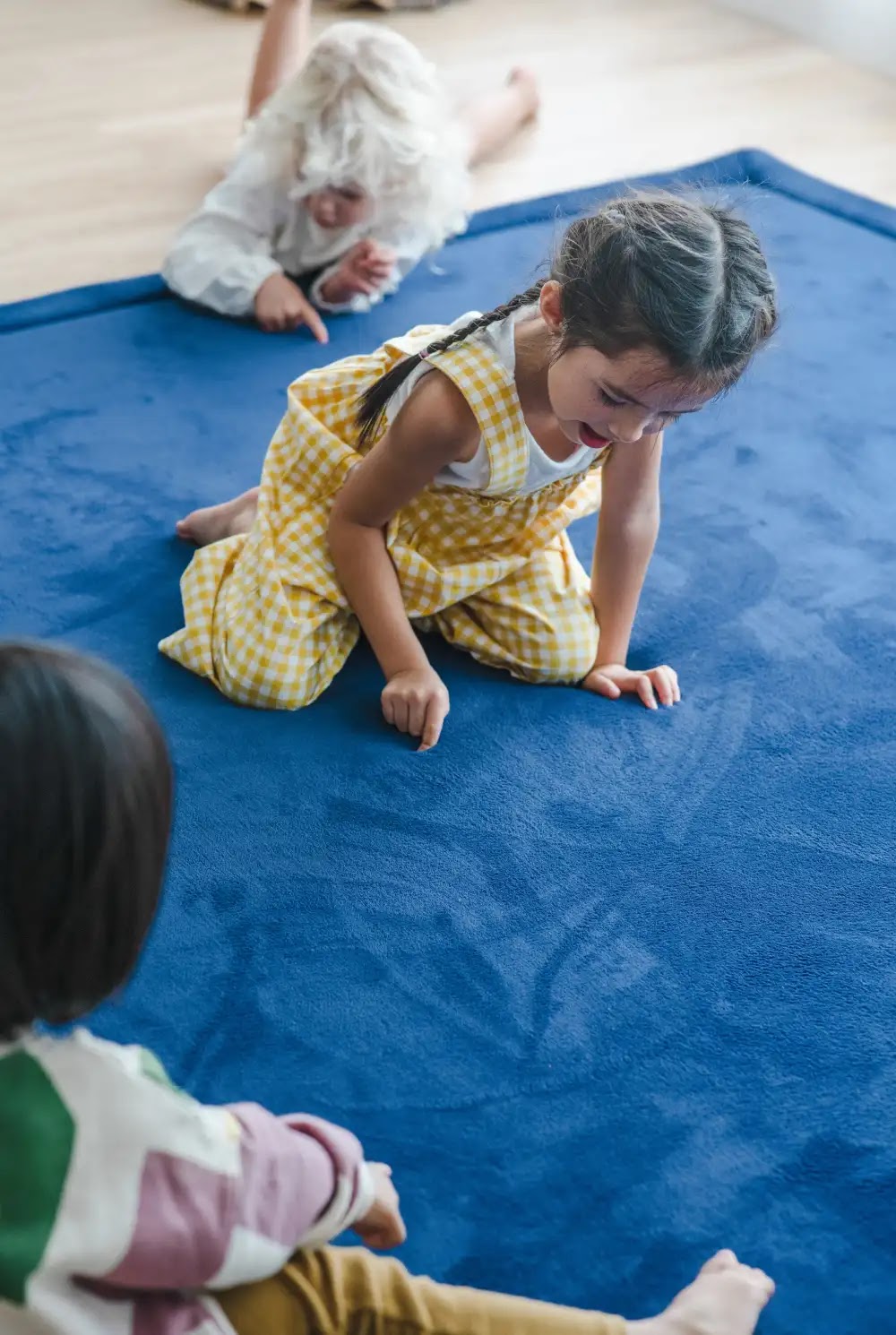
The safest flooring for a baby room is usually the flooring you can keep clean, dry and free from trip hazards, with an added soft layer where your baby spends time playing. You do not need to renovate the whole nursery to create a comfortable floor space.
Timber and laminate floors
These are common in Australian homes and easy to wipe after a spill, but they can feel hard and cool. A rug adds warmth, while a cushioned mat may suit the crawling and cruising phase better if your baby spends long stretches on the floor.
Tiles
Tiles are wonderfully practical on a hot summer day, though they can be unforgiving for little knees and adult knees alike. If the nursery has tiles, look for a surface that stays flat and does not slide about as your baby pushes, rolls and eventually stands.
Carpet
Carpet already provides some softness, but you may still prefer a defined play surface for milk dribbles, nappy changes and the inevitable mystery crumbs. A smaller washable rug can work well here, provided it lies securely and does not bunch at the edges.
Whichever baby room floor option you choose, keep cords, loose rug corners and small objects out of reach. Follow the manufacturer’s age and usage guidance, and stay nearby during floor play and early standing practice.
Rug, mat or carpet?
These terms get mixed together, but they suit different family routines. The best flooring for a nursery is not always the softest option. It is the one that fits your room, your cleaning habits and the stage your baby is in right now.
| Option | Best for | What you will notice | Things to check |
|---|---|---|---|
| Traditional rug | Adding warmth and a finished nursery look | A cosy visual layer under a chair, cot-side area or reading corner | Grip, pile height, loose fibres and how it handles spills |
| Cushioned indoor mat | Tummy time, crawling and shared floor play | A more comfortable surface for babies and the adults sitting beside them | Cleaning instructions, edge stability and room measurements |
| Wall-to-wall carpet | A permanently soft nursery floor | Warmth across the whole room | Cleaning routine and whether you still want a separate play zone |
| Hard floor with no covering | Rooms used mainly for sleep and dressing | The simplest cleaning routine and a cooler feel in summer | Where you will comfortably sit for feeds and floor play |
A traditional rug often works beautifully in a nursery that is mostly used for sleeping and changing. If your baby’s room doubles as the everyday play space, a soft indoor mat can feel more useful than a decorative rug alone.
The details worth checking

You do not need to become an expert in nursery flooring. A few practical checks will tell you far more than whether something photographs nicely in a styled room.
-
Flat edges: Raised corners are annoying for adults and can become more noticeable as babies begin crawling and toddlers start charging around.
-
Steady placement: The surface should stay where you put it. A non-slip nursery floor matters more than a perfectly matched colour palette.
-
Easy everyday care: Consider bottle spills, nappy leaks, snack crumbs and the fact that you may not have time for a complicated cleaning ritual.
-
Enough usable space: Measure the clear floor area, not the whole room. Allow for the cot door, drawers and the rocking chair you might sit in at 3 am.
-
A finish you can live with: Your baby’s room will change quickly. A neutral or versatile floor piece can move into the lounge room, playroom or reading corner later.
If you love the softer look of a round shape, a circle rug can suit a small corner beside a feeding chair or bookshelf. It is less useful if you want a large crawling lane across the room, so shape is worth considering before colour.
Materials, pile and safety checks
A beautiful fluffy rug can be tempting, especially in a nursery that needs a little softness. For everyday baby life, though, a low-pile rug with a tightly finished surface is often the calmer choice. You can see crumbs, loose threads and small dropped items more easily, and it is usually less of a project to clean after breakfast somehow reaches the floor.
Deep texture is not automatically wrong, but it asks more of your cleaning routine. If you have a dog or cat wandering through the house, you may notice fur settling into a shaggy surface long before you planned to vacuum.
Keep your shopping checklist simple. Look for a finish that lies flat, care instructions you can realistically follow, and a surface designed for the room’s level of use. For mats and products your baby will spend lots of time on, recognised toy safety testing and clearly stated dye or fabric safety information can offer useful reassurance.
Spill language can be confusing, too. A waterproof inner layer and a water-resistant top do different jobs. The inner layer may help protect the floor beneath, while the surface still needs prompt wiping if milk, food or a drink lands there. A quick clean is much easier than discovering a dried patch after bedtime.
When a cushioned mat makes sense

A cushioned floor mat is especially useful if your nursery has timber or tiled floors and you expect the room to be used for proper floor time. It gives you a familiar place to put your baby down while you fold washing nearby, chat through a nappy change or simply sit together for ten quiet minutes.

Picture a floor mat that grows right along with your little one, that's the idea behind the Momomi Baby Play Mat. Built for indoor living spaces, it's designed to stick around long after the newborn days, becoming a spot for family movie nights, puzzle time, or just lounging together. The secret is in the layers: a plush velvet surface that soaks up everyday drips, paired with our signature PuffySponge™ core for extra cushioning underfoot. Keep in mind, though, it's meant for quick wipe-ups, not full soaking or a spin in the washing machine.
Explore the Momomi Baby Play Mat if you are looking for an indoor surface that can handle baby play now and still feel at home in family life later.
One useful distinction: this type of mat is for indoors. For a beach day, park picnic or backyard afternoon, choose a surface made for outdoor use instead.
Momomi’s approach to family products is rooted in everyday shared moments, not a nursery that has to look untouched. You can read more about the thinking behind the range on the Momomi story.
A simple cleaning routine for nursery floors
The easiest nursery cleaning routine is the one you can manage during a normal week, not the one that needs a free afternoon and a silent house. Pick up visible crumbs and toys first, then dust surfaces before you vacuum or wipe the floor covering. That order helps stop dust simply travelling from the change table back down to the rug.
Once a week, check the corners and edges, especially after you have moved furniture or vacuumed. Follow the item’s own care instructions, then allow the surface to dry fully before your baby returns to floor play.
Milk dribbles, food splats and nappy mishaps are best dealt with promptly. Lift away any solids, gently blot rather than scrub, and clean the affected spot using the care guidance for your rug or mat. Harsh cleaners can be harder on some materials than the original mess, so there is no need to reach for every product under the sink.
Do a quick sweep around the spots dust likes to gather: under the cot, behind drawers, along floor edges and near curtains. In homes with pets, these little checks can also help keep fur from building up in the cosy corners where your baby likes to wriggle and play.
Pros and cons

What parents love
-
A soft floor layer can make nursery floor time more comfortable for both you and your baby.
-
Rugs and mats help create a clear play area in small bedrooms and open-plan homes.
-
A well-chosen piece can stay useful through crawling, early walking, toddler books and quiet play.
-
It can soften the look and feel of timber, vinyl or tiled flooring without changing the whole room.
-
Choosing an easy-care surface makes everyday spills feel less like a major event.
Things to consider
-
A thick or heavily textured rug can be harder to clean after milk spills and snack accidents.
-
A large mat takes up visual space, particularly in a nursery already filled with a cot and storage.
-
Soft flooring still needs close supervision during tummy time, crawling and early standing.
-
Some rugs suit décor beautifully but offer less comfort for long stretches of baby play.
Choosing cushioning for crawling and early standing
There is a difference between a rug that makes a nursery look cosy and a surface you will happily sit on for twenty minutes while your baby practises reaching for a toy. A decorative rug may be lovely beside the feeding chair, while a cushioned mat can make more sense for longer tummy-time sessions, crawling laps and the part where you end up building blocks beside them.
Thickness matters, but it is not the whole story. Your baby needs a surface that lies flat, stays steady and leaves enough clear space for movement. A very thick option that shifts at the edges or squeezes the walking path between the cot and drawers may create more fuss than comfort.
For an apartment nursery or smaller room, covering every centimetre of floor is rarely necessary. A defined play patch can be enough, especially if it gives your baby room to roll, turn and crawl while leaving a clear route for you to carry washing, feeds and an occasionally sleepy baby.
Many babies typically begin testing their balance in their own time. Stay close during floor play and early standing practice, and keep the area free from loose objects, unstable furniture and anything that could make a wobbly moment more complicated.
Nursery setups that work in real homes
The cot-side comfort zone
If the nursery is mainly for sleep, dressing and feeds, a smaller rug beside the cot or feeding chair may be all you need. It gives bare feet somewhere warm to land during those early mornings without taking over the room.
The shared-bedroom play patch
For babies sharing a room with an older sibling, choose a defined floor area that can hold a few age-appropriate toys without becoming a permanent obstacle. Keep tiny pieces well away from babies who are still exploring with their mouths.
The nursery that becomes a playroom
If you know this room will gradually become a toddler space, choose something that can work alongside low storage, books and later kids table and chairs. This is where a versatile, easy-to-care-for floor surface earns its place.
The lounge-room nursery phase
Not every family has a dedicated nursery straight away. If your baby’s main play area is the lounge room, selecting a floor piece you are happy to see every day matters. It is easier to use the space well when you are not rushing to hide it before visitors arrive.
Frequently Asked Questions
Are baby room rugs safe for crawling babies?
Baby room rugs can be suitable for crawling babies when they lie flat, stay securely in place and are kept clear of loose items. Check corners regularly, especially after vacuuming or moving furniture. A soft surface can make floor time more comfortable, but you still need to supervise your baby closely as they roll, crawl and begin pulling up.
What is the best flooring for a nursery with timber floors?
For timber floors, many families choose a rug or cushioned indoor mat in the area used for feeds and floor play. The right option depends on whether you want a decorative layer, a larger crawling space or simpler cleaning after spills. Measure the room first, then choose a surface that leaves clear walking space around the cot and drawers.
Should I choose carpet or a mat for a nursery?
Carpet gives softness across the whole room, while a mat creates a defined area for tummy time, crawling and play. If your nursery already has carpet, a separate mat may still help keep the play zone organised. If you have hard floors, a cushioned mat can feel more comfortable during the months you spend sitting on the floor together.
How big should a nursery rug be?
A nursery rug should be big enough for its job without blocking furniture or doorways. For a feeding corner, a smaller size may work well. For baby play, choose an area that lets your little one move freely while keeping you comfortably alongside them. Marking the space with painter’s tape before buying can make the decision much easier.
Can I put a rug under a cot?
You can place a rug partly or fully under a cot if it sits flat and does not interfere with the cot’s stability. Many families prefer positioning it beside the cot instead, where it gives them a warm, soft place to stand during overnight wake-ups. Keep the sleep space clear and follow safe sleep guidance for your baby’s cot.
Do I need a non-slip layer under a nursery rug?
A non-slip layer can be helpful if your rug moves on timber, laminate, vinyl or tiles. The goal is simple: the surface should stay put while you walk across it and while your baby moves over it. Check that any underlay sits flat, suits your flooring type and does not create raised edges around the rug.
How do I clean a nursery rug after milk or food spills?
Clean a nursery rug after milk or food spills by removing solids first, gently blotting the area and following the manufacturer’s care instructions. Try not to scrub the spill deeper into the fibres. Once you have cleaned it, let the rug dry fully before your baby plays there again.
Are high-pile rugs suitable for a baby’s room?
High-pile rugs can work in a baby’s room, but they are often harder to inspect and clean than low-pile options. Crumbs, pet hair and loose fibres can settle deep into the texture. A lower, tightly finished pile may suit families who want a simpler everyday cleaning routine.
What materials should I look for in a nursery rug or play mat?
Look for a nursery rug or play mat that lies flat, has clear care instructions and suits the amount of floor play you expect. For a product your baby will use often, recognised toy safety testing and clearly stated fabric or dye safety information can be helpful checks. Choose a finish you can wipe, vacuum or clean without turning every spill into a major job.
How can I reduce dust and pet hair around a nursery floor?
You can reduce dust and pet hair by dusting nursery furniture before vacuuming or wiping the floor, then checking under the cot, behind furniture, near curtains and along floor edges each week. A low-pile rug or easy-care mat can make these quick clean-ups simpler. If you have concerns about allergies or breathing, speak with your GP or paediatrician for individual advice.
Main Points
-
Baby room rugs create a softer, warmer floor zone for feeds, tummy time and everyday play.
-
The best choice depends on the floor underneath, how the room is used and how easily you can clean the surface.
-
Flat edges, secure placement and enough open floor space matter more than following a particular nursery trend.
-
A traditional rug suits a decorative nursery, while a cushioned indoor mat can better suit crawling and active floor play.
-
Keep all floor surfaces clear of loose objects and supervise your baby during play and movement practice.
Final Thoughts
You do not need a picture-perfect nursery floor. You need a spot where you can sit down with your baby without immediately wishing you had brought a cushion, and where they can stretch, wriggle and explore while you are close by. Start with the floor you already have, then add softness where your family will truly use it.
That first little floor zone may begin beside the cot, but it will soon hold books, blocks, giggles and a baby who suddenly has places to be. Choose for your real routine, not somebody else’s nursery photo.
Think of this as friendly guidance rather than a doctor's note, every little one is different, so if something here doesn't quite match your child's situation, it's always worth a chat with your GP, paediatrician or maternal child health nurse.


