

Family Living Room Ideas: Beautiful, Practical Spaces Made for Real Life
By the end of an ordinary Tuesday, your family living room ideas may be tested by a half-built cubby, a trail of tiny shoes, an abandoned snack bowl and a child who has decided the sofa cushions belong on the floor. You can look around and wonder where the room you styled so carefully went.
It is still there. It is simply working very hard for your family.
What this guide covers: these family living room ideas will help you choose what truly earns a place in a shared space. We will look at layout, storage, soft surfaces, furniture, pets and the everyday mess that comes with children. Your home does not need to feel like a permanent play centre.
Family living room ideas start with real life
The loveliest family room decor often begins with a slightly unglamorous question: what happens here between breakfast and bedtime? Not the version you picture. The version that really unfolds.
If your children build, climb, draw, snack, read and tumble in the same room where you answer emails and watch television, let those habits lead. A living room for families works best when everyone has somewhere to be without needing to act as though they are in a showroom.
Stand in the doorway for five minutes and watch the usual flow. Where do school bags drop? Which route runs from the kitchen to the sofa? Where does your toddler pause to investigate every drawer? You will learn more from that small check than from another saved inspiration photo.
Need flexible seating? This modular sofa guide can help you think through shapes, room flow and how much clear floor you would like to protect.
Family living room ideas need room to move
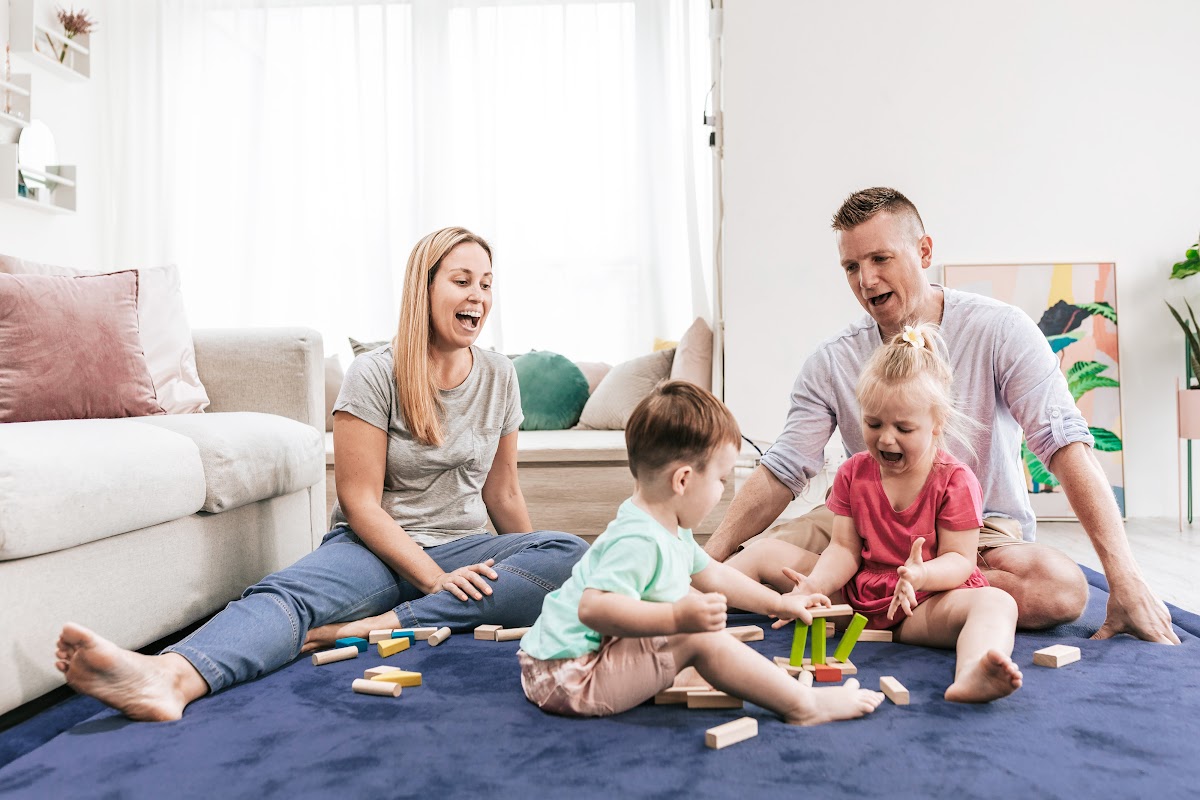
A family-friendly home design needs one clear patch of floor. It does not need to be enormous, especially in an apartment, but it helps to have somewhere your children can play while you are close by.
When your baby is rolling, crawling or pulling up, clear loose cords, unstable side tables and small objects from that floor zone. A soft surface can make floor time cosier, but it never takes the place of your watchful supervision.
Big kids need their floor space too.
They may be past crawling, yet they still sprawl with books, build train tracks and practise dance moves during the ad break. Keeping one area open can make the room feel calmer, because play has a place to land besides every cushion you own.
You do not need a formal playroom. A low basket with a few favourites and a familiar spot for quiet play can be plenty. If you are making a more child-led corner, our Montessori play gym article has ideas for keeping a shared room inviting without piling it high with clutter.
Family living room ideas for TV and traffic
The television can quietly become the boss of the room, especially when the sofa has been pushed into the only spot with a decent view. Family movie nights matter, of course. So does walking from the kitchen to the entry without stepping over a toy basket or squeezing behind a chair.
Begin with the routes you take most often. Keep a clear path between the kitchen, front door, sofa and play area. Then place seating around that path rather than right across it. In a smaller lounge room, one uninterrupted walkway can make school-run o'clock feel far less frantic.
Your room can still be lovely for television without handing the TV every wall and every seat. Angle the sofa or bring in a chair so you can chat without twisting your neck, then leave the middle free for puzzles, floor play or a pre-dinner dance break.
Pieces that move easily are worth their weight in gold. A light side table, pouffe or ottoman can live beside the sofa most days, then slide away when cousins arrive or a block tower needs a little more room. Your room does not have to hold one shape all day.
Family living room ideas for surfaces you can live with

Light upholstery can look gorgeous, right up until somebody walks in with muddy socks after a wet school run. Dark fabrics disguise some marks, but may show lint, pet hair and biscuit crumbs. Neither is wrong; the kinder choice is the one you can keep up with in your actual week.
For a toddler proof living room, notice how every surface behaves before the colour wins you over. Can you clean underneath it? Is the coffee table all hard corners at toddler height? Will a rug slip on timber or tile? Can you shift a side table when your child suddenly needs more play space?
Hard floors are wonderfully practical in an Australian summer, especially after beach sand appears from pockets and shoes. But they can feel chilly and unforgiving during long stretches of floor play. A rug-like surface can soften the room while giving you a comfier place to sit beside your baby.
| Surface option | What it can help with | What to keep in mind |
|---|---|---|
| Hard floors | They are practical after beach sand appears from pockets and shoes. | They can feel chilly and unforgiving during long stretches of floor play. |
| Rug-like surface | It can soften the room and give you a comfier place to sit beside your baby. | Check whether it will slip on timber or tile. |
| Play mat | It may suit your family if you spend long stretches sitting and playing on the floor. | Choose one that fits how often spills happen and whether you want something you can wipe quickly. |
With pets, a regular rhythm helps more than waiting for chaos. An evening sweep, a crumb check beneath the sofa and one basket for wandering toys can do more for your room than a heroic monthly tidy.
Create an easy cleaning routine
Pet hair has an impressive talent for reappearing five minutes after you vacuum. Add open windows, school bags, sandy shoes and a dog who has claimed the warmest part of the rug, and the living room gathers dust faster than seems fair.
Look first at the spots that quietly collect it: curtains, sofa cushions, rugs, skirting boards, under furniture and pet resting places. Beneath the sofa deserves a quick peek too, because that is where crumbs, puzzle pieces and fur often start their own tiny community.
Top to bottom is the simplest order.
Wipe higher surfaces first with a damp microfibre cloth, then vacuum the floor and upholstery, and shake out or clean soft furnishings as their care instructions allow. You will not be brushing dust onto a floor you have already finished.
Little resets are usually kinder than giving up Saturday to cleaning. A two-minute cushion fluff after dinner, a sweep around the pet bed and a glance under the coffee table can keep the room comfortable without turning family time into a cleaning programme.
Decide what can stay on show

You do not have to hide every sign of childhood to create a stylish living room with kids. A few chosen books, a beautiful basket and one or two toys your child comes back to can make a room feel warm rather than overtaken.
What helps is a boundary for the visible things. One shelf, one low basket or one tray gives everyday items a home. It also makes pack-up feel less enormous, because your child is not being asked to sort an entire room.
Save the loudest, messiest or most complicated toys for elsewhere when you can. Living rooms tend to work better with open-ended favourites, blocks, books, puzzles and drawing supplies, than with heaps of tiny pieces that slowly migrate beneath the sofa.
Choose storage you can manage when you are tired. If putting toys away needs labels, lids and careful stacking every evening, most of us know it will not happen every evening.
Style the room without filling it up
A coffee table can look perfect in a photo, then become home to drink bottles, homework and a tiny dinosaur ten minutes later. Styling ideas can be useful starting points, but they should never make your ordinary family day harder.
Try the 2-3 rule when the room feels busy: choose two or three main colours, then repeat them through soft details such as cushions, baskets, artwork or book spines. You might start with a shade already in your sofa or rug, then bring in one warmer colour and one quiet neutral.
Odd-numbered groups can help as well. The 3-5-7 decorating rule simply suggests putting three, five or seven objects together, depending on the size of the shelf or table. Three things on a tray may feel settled; five books and a small bowl may suit a wider shelf.
Leave room for the snack plate and today's important drawing.
A room often feels more grown-up with fewer things, chosen lovingly. Keep what makes you smile, and let the rest of the surface stay free for the sweet, ordinary mess of family life.
Family living room ideas for furniture with a job

Family room furniture earns its place when it handles everyday life yet lets the room feel a little grown-up after bedtime. A coffee table might become a craft bench, an ottoman may hold blankets, and a sofa needs room for reading, resting and a child sharing a very serious dinosaur fact right beside you.
Before a large piece comes home, measure the path around it. Leave space for doors, drawers and the washing basket that somehow always needs to pass through. In a smaller home, a room that looks full can become awkward surprisingly quickly.
Height matters too. Lower pieces can be easier for young children to use on their own, while tall shelving keeps adult bits away from busy little hands. Secure furniture that could tip, and keep tempting climbing spots away from windows and balconies.
The Australian Competition and Consumer Commission's toppling furniture guidance is a helpful reminder to secure tall pieces in the rooms your child explores.
If you are considering a child-sized seat instead of changing your whole sofa, our guide to a kids sofa may help you compare styles for a shared lounge room.
Softer options for a room you all share
Sometimes you do not need another storage basket or another toy. You need one comfortable zone that lets the room work for everybody: the baby on the floor, the bigger child building nearby, and you trying to finish a cup of tea while it is warm.
Momomi Baby Play Mat

If your living room needs to stay a living room while also giving your baby a softer place for supervised floor play, the Momomi® Baby Play Mat can be a practical fit. Its velvet top needs prompt wiping after spills and it is not machine washable, so it works best if a simple wipe-as-you-go rhythm suits your family.
Made for indoor use, it can sit right in the middle of family life instead of appearing only for tummy time. Over time, it can become a familiar place for reading, playing and resting as your children grow.
See the mat for your shared space →
Moofu™ 6-in-1 Modular Kids Sofa Bed

When mornings call for a cozy reading nook and afternoons demand a soft play space, the Moofu™ 6-in-1 Modular Kids Sofa Bed keeps up without missing a beat. It switches between a single seat, an L-shaped lounge, a half playmat, a full playmat, and a sofa bed. Underneath it all, WonderCore™ Foam delivers steady, reliable support. With little ones tumbling about, stay close during active play and keep the floor around it clear.
It makes sense when you want one generous piece to move from quiet reading to a visit from cousins. Rather than adding more furniture, you can adapt the spot you already have as the day changes.
Family living room ideas in the small details
The best family living room ideas are often the quietest ones. Keep a washable basket near the sofa for blankets, a lidded container for textas, and one home for chargers so they do not end up tangled near little hands.
Give arriving bags somewhere to land by the door, even if it is only a sturdy basket. It stops the daily pile travelling across the room and gives your child a small routine they may soon be able to handle themselves.
Travel gear deserves a home too. A hook or low cupboard for backpacks means your lounge room is less likely to become the final hiding place for a hat, library book or water bottle. If a trip is on the horizon, kids travel planning has helpful ways to share packing with children.
Perfect rooms are not the point. The ordinary moments when you all gather there are.
If you enjoy shaping a home around those family moments, you can read more about the thinking behind it in Momomi’s story.
Family living room ideas: frequently asked questions
How can I make my living room child-friendly without making it look like a playroom?
Choose a small group of play things that belong in the room, then give them a clear home. A basket, low shelf or closed cabinet lets your child reach what they use while keeping visual noise contained. You can also choose colours and textures that sit happily with the rest of your room instead of buying everything in bright plastic. You are not trying to hide childhood; you are making the room feel shared by everyone who lives there.
What is the 2-3 rule for living rooms?
The 2-3 rule is a gentle decorating prompt, not something you have to get right. Pick two or three colours that feel lovely together, then repeat them in cushions, baskets, books or artwork. It gives the room a little rhythm without sending you out to buy matching décor. Begin with colours you already enjoy seeing every day.
What is the 3-5-7 rule of decorating?
The 3-5-7 rule suggests styling shelves, trays or tables in odd-numbered groups. Three objects may suit a small coffee table, while five books and a vase can work on a longer shelf. It can help a display feel balanced, but leave space for what your family truly uses. A surface does not need to stay styled all day to be beautiful.
What furniture should I avoid with toddlers in the living room?
Take extra care with furniture that tips easily, sharp-edged tables at face height and tall storage that calls to be climbed. Secure tall units to the wall, keep heavy items low, and move breakable décor away from shelf edges.
You do not need to clear out every grown-up item. It is about making your toddler's usual routes less frustrating for both of you. Clear floor space and steady furniture give little explorers room to practise moving safely while you supervise.
Should I choose a rug or a play mat for a family room?
A rug can bring warmth and define the seating area, while a play mat may suit your family if you spend long stretches sitting and playing on the floor. Your choice usually comes down to how you use the room, how often spills happen and whether you want something you can wipe quickly.
If your baby is starting floor play, a softer surface can feel nicer for you both. Any floor surface will still need regular cleaning.
How much open floor space does a family living room need?
You do not need a huge empty room. A clear patch large enough for your child to sit, build or stretch out with a book can make a real difference. In a compact apartment, that might mean nudging the coffee table over, choosing smaller side furniture or using a basket you can lift away quickly.
Protecting one open spot is often more helpful than making separate zones for every activity your family loves.
How can I arrange a family living room with a TV?
Keep the TV easy to see from the main seats, then make sure it is not blocking the routes your family takes all day. A clear path between the kitchen, entry and sofa matters more than filling every wall with furniture. Try seating you can angle a little for movie nights, with smaller movable pieces so the centre can open for play.
What is the 3-4-5 decorating rule for a room?
The 3-4-5 decorating rule is another loose styling idea. You might use three main colours, four types of texture and five decorative touches to help a room feel layered without becoming crowded. There is no need to count every item. Use it only if it helps you edit what is already there and save more space for family life.
How do I stop toys from taking over the sofa and coffee table?
Give yourself one simple reset point. Before dinner, invite your child to return a few things to one basket or shelf instead of hoping for a perfect clean-up. Keep only the toys that suit the living room nearby, such as books, blocks and drawing materials.
Rotating the rest can help too. A smaller selection feels fresh for children and leaves fewer pieces scattered around. It also means you can sit down at night without finding a toy car under every cushion.
Can a shared living room support independent play?
Yes, especially when your child knows where a few familiar activities live and can reach them without help. Independent play does not mean you disappear into another room. With young children, it often looks like them playing happily nearby while you fold washing, make tea or sit close with your own book.
Keep it simple, offer fewer choices and reset it often. A familiar corner can feel more inviting than a room bursting with options.
What is the best layout for a small family living room?
Begin with the paths people use most, then arrange larger furniture around them. Keep a direct route between the kitchen, entry and seating area so everyday movement does not become a shuffle around toys. Use wall space for storage where possible, choose pieces you can move when needed and resist filling every corner.
A small room can still feel generous with a clear centre and fewer things underfoot.
How can I keep a family living room clean without constantly tidying?
Link little clean-ups to moments already in your day. Shake out crumbs after afternoon tea, return books before bath time and check the floor once the children are asleep. Keep cleaning supplies safely out of children’s reach, follow product labels and air the room when you use cleaning products.
You are aiming for a room that feels good to live in, not one that looks untouched. A few daily habits are usually easier than giving the whole weekend to tidying.
Main Points
- Plan for how your family truly uses the room: play, snacks, rest and everyday clutter included.
- Keep one clear floor area for supervised play, rather than letting it take over every part of the room.
- Choose surfaces and storage that fit your cleaning routine, not an imaginary version of your week.
- Look for furniture that solves more than one everyday need while leaving easy paths to walk through.
- A warm family room does not need to look perfect. It needs to feel easy for everyone to use.
Family living room ideas for real life
Your living room does not have to choose between beautiful and properly lived in. The best version may have a basket of books beside the sofa, a little room for blocks on the floor and a cushion that is never quite where you left it. That is family life happening right in front of you.
Start with one change that takes friction out of your day. Clear a path, move the fragile vase, add a basket by the door or make a softer place where you can sit with your baby. Small shifts like these can help the room feel calmer almost straight away.
For more family living room ideas, browse the Home Comfort journal for gentle, practical inspiration for the rooms where your family life unfolds.
A quick note before you dive in: what you're reading here is meant to inform, not to replace a proper check-up. Every little one is different, so for advice tailored to your child, chat with your GP, paediatrician or maternal and child health nurse.


