

Do Dust Mite Covers Really Work?
It is 3 am, your child is snuffly again, and you are changing the sheets for what feels like the hundredth time. That is when dust mite covers can be one helpful layer: tightly woven zippered encasements that go around a pillow, mattress or duvet, creating a physical barrier between the sleeper and dust mites already living inside. They will not fix every sniffle, but alongside regular washing, ventilation and fewer dust-catching soft furnishings, they can help you build a calmer bedroom routine in an Australian home.
The basics
What are dust mite covers?
Think of dust mite covers as the layer that goes on before you make the bed. They are full encasements that zip around bedding, rather than ordinary fitted sheets or pillowcases. That closely woven barrier keeps what is inside a mattress, pillow or duvet contained, while making it harder for new dust mites and their particles to reach the sleeper. They are especially useful for the awkward-to-wash things in a lower-allergen bedroom: mattresses and pillows.
Do dust mite covers actually make a difference?
They can make a practical difference by placing a barrier between you and the dust mites and particles that build up inside bedding over time.
Still, they work best as part of the whole routine, not as the one thing asked to carry the room. You will usually get more from a cover when you are also washing removable bedding regularly, airing the room and stopping clothes, soft toys and spare cushions from quietly piling up beside the bed.
If you are looking at the bigger bedroom picture, our guide to anti allergy bedding shows how washable layers, pillows and bedding choices can work together.
Pillow, mattress and duvet covers
Should I buy a dust mite pillow cover or a dust mite mattress cover first?
If you can only start with one, I would look at the mattress. It is large, hard to wash and used every night. A dust mite pillow cover can be worthwhile too, particularly when your child or partner spends hours sleeping with their face close to the pillow. Begin with the item that is hardest to clean properly, then add more when your routine and budget allow.
Is a dust mite mattress encasement different from a mattress protector?
Yes. An encasement wraps around the whole mattress and usually closes with a zip; a mattress protector normally sits over the top like a fitted sheet.
Both can earn their place, just in different ways. The encasement acts as a barrier around the mattress itself. The protector is there for everyday sweat, spills and the very believable moment a toddler arrives in the big bed with a drink.
Are dust mite proof covers the same as hypoallergenic bedding?
Not quite. Dust mite proof covers describe a barrier layer intended to block dust mites and their particles. “Hypoallergenic” is broader wording, and it can mean different things from one bedding item to the next. It is worth reading beyond the single word on the label. You can also see how pillows fit into the room setup in our article about hypoallergenic pillows.
Using dust mite covers properly

How do I put a dust mite cover on bedding?
The easy way is to treat the encasement as the first layer, then make the bed as usual over it. If you have ever wrestled a fitted sheet over a deep mattress while a child “helps” by bouncing nearby, save this job for a full sheet change.
-
Remove sheets, pillowcases and any removable mattress protector.
-
Place the dry encasement over the mattress, pillow or duvet and close the zip fully.
-
Cover it with your usual clean bedding, then check that the zip is tucked away and comfortable.
Once it is on, leave it there between washes so it can keep doing its barrier job.
How often should I wash dust mite protective covers?
Let the care label lead here, because fabrics and zip constructions vary.
Most of us wash removable sheets and pillowcases more often than the encasement, then wash the cover during a deeper bedding reset or after spills, illness or a particularly humid patch of weather. Consistency matters far more than turning Saturday into a laundry marathon with sheets draped over every chair.
A lower-allergen bedroom routine
A cover does its best work when the rest of the bed is not carrying the whole load. You do not need to deep-clean the house before breakfast, either.
A small weekly reset can make the bedroom feel fresher without swallowing up family time. Start with the layers closest to the sleeper: sheets and pillowcases. Wash them regularly in line with their care labels, and make sure they are fully dry before they go back on the bed. On a sunny day, opening the room for a little while can feel lovely too, provided outdoor pollen is not bothering anyone at home.
Then have a look around the bed.
Soft toys, spare cushions, clothes piles and pet bedding all catch dust, especially once they settle into a corner for weeks. Nobody needs to ban the favourite teddy or evict the family dog from every cosy spot. Choose what is washable, rotate a few soft toys rather than keeping every one on the bed, and move pet bedding away from the sleeping area if that suits your home.
One sheet change, a quick clear-out of the bedside floor and one load of washable extras each week is plenty of a routine to begin with.
During humid weather or winter illness season, you may decide to do a little more often. The goal is a room you can maintain, not a perfectly empty bedroom no child would recognise as their own.
Symptoms and realistic expectations

Will dust mite covers stop allergy symptoms completely?
No. Dust mite covers cannot promise to stop allergy symptoms completely.
Sneezing, congestion, itchy eyes and unsettled sleep can come from many places: seasonal pollen, pet dander, viral illnesses and dry indoor air among them. A cover may support a lower-allergen bedroom, but if symptoms are ongoing, severe or worrying you, speak with your GP, paediatrician or maternal and child health nurse rather than trying to solve it all through bedding changes.
Can dust mite covers help with eczema or asthma?
Dust mite covers are not a treatment for eczema or asthma, and they should not replace advice or medication from your child’s health professional. Some families include them because reducing dust-collecting layers feels like a sensible home step, especially in sneezy seasons.
Keep it small and practical: clean bedding, a well-aired room and a routine you can manage during school terms and busy weeks.
Why is my child still waking stuffy after we changed the bedding?
Fresh bedding does not always explain a child’s sleep or breathing changes. The room may be dusty, pollen may be coming through an open window, a pet may sleep on the bed, or your child may simply be catching the winter bug that has made its way around the household.
Check the everyday basics first. If the pattern keeps returning or affects your child’s comfort, ask a health professional for guidance.
Humidity, seasons and dust mites
Australian weather can make bedroom routines feel different from one month to the next. A warm, humid spell can leave sheets slow to dry and rooms stuffier, while winter brings closed windows, damp washing racks and one cold after another at school.
But one season does not explain every sneeze or restless night.
On damp days, give bedding enough time to dry thoroughly before making the bed. If the weather and your home allow, a little ventilation can help the room feel less stale. Keeping baskets of clean or damp laundry out of the bedroom is another small win, even if the basket temporarily takes over a hallway corner instead.
There is no need to chase perfection during a sticky summer week. Keep the bed layers manageable, wash what you can and leave the big linen-cupboard sort for a quieter weekend. If your child’s symptoms continue, become more troublesome or affect sleep, your GP or paediatrician can offer advice that is personal to them.
What to look for when buying
What should I look for in a dust mite cover?
Look for a full zippered encasement in the exact size for your mattress, pillow or duvet, with a fabric that feels comfortable beneath your usual bedding.
Care instructions matter just as much, because even the most impressive-sounding cover is not much help if one difficult wash leaves it folded in the cupboard. A secure zip, neat seams and a fit that does not bunch under the sheet make ordinary Tuesday-night bed-making easier.
Do I need separate anti dust mite bedding covers for every bed?
No, you do not need to tackle every bed in the house at once. Start with the bedroom where concerns are most noticeable, or with the mattress that has been used the longest. Guest beds can wait.
You can add pillow or duvet covers later if they suit your routine. A staged approach is gentler on your time when family life already includes lunches, work emails and somebody asking for a snack five minutes after dinner.
If you are comparing options, this overview of the best anti allergy bedding in Australia can help you sort through the features that matter most at home.
Cover materials and testing claims
The little details are what you notice once a cover is actually on the bed. A closely woven fabric can help create the barrier you want, but it should also feel comfortable beneath the sheets and be quiet enough that nobody notices it whenever they turn over.
Full coverage matters too.
A cover that surrounds the mattress, pillow or duvet and closes securely gives you a more complete barrier than one that only sits across the top. Check that the zip closes neatly, feels protected from skin and stays closed through ordinary bed-making and washing.
Labels can be confusing, especially when you are trying to make a quick decision between school drop-off and the next load of washing.
“Hypoallergenic” may be useful wording, but it does not tell you everything about construction or assessment. Look for clear information about sizing, washing instructions and any testing the maker says has been carried out. If those details are vague, it is reasonable to ask questions before bringing another bedding item home.
The best cover is usually one you can fit properly, leave in place and care for without creating another complicated weekly job. A breathable, comfortable layer that stays on the bed is more useful than one that sounds impressive but ends up beside the mystery single sock in the linen cupboard.
Adult bedding options

Do I still need a cover if I choose an anti-allergy duvet?
Possibly. A duvet and a dust mite cover do different jobs: an encasement adds a barrier around the bedding item itself, while an anti-allergy duvet may suit a cleaner, more comfortable adult sleep setup.

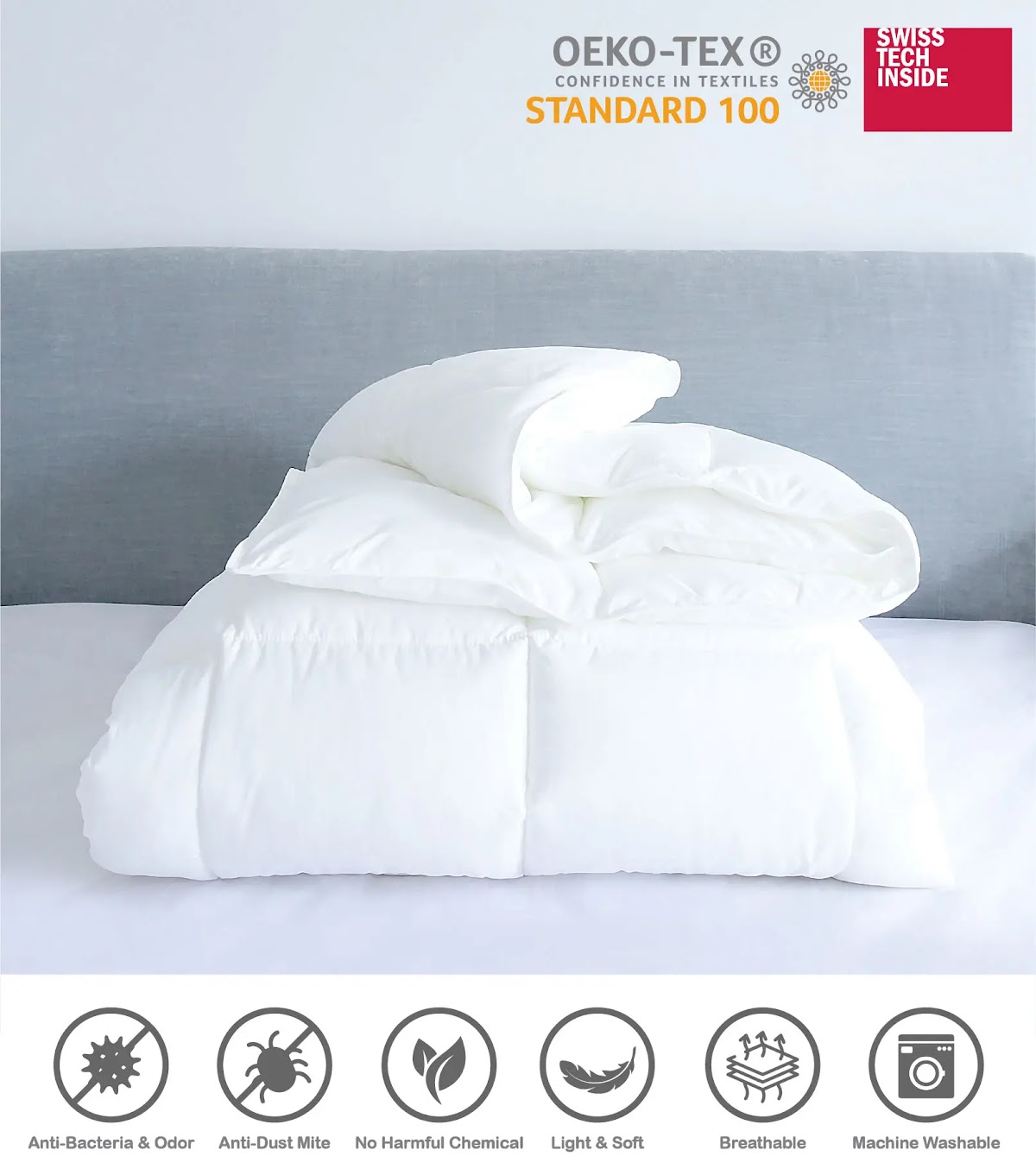
If you are refreshing your own bed as well as your child’s, the Momomi Plush Anti-Allergy Duvet is an adult-only option for allergy-sensitive homes. It gives you that soft, light, fluffy feeling at bedtime, while its anti-bacteria, anti-dust mite and anti-odour properties can be a reassuring fit for the bedroom routine you are already building.
When a fresh adult duvet would make the room feel more comfortable, see the adult duvet →
What is the difference between a comforter and a duvet for an allergy-conscious bedroom?
The wording varies between homes and retailers, but the practical question is whether the bedding is washable, breathable and easy for you to keep fresh. A duvet sits inside a cover, giving you an extra washable outer layer. A comforter is often one finished piece.
If you are working out what fits your laundry routine, our guide to choosing a comforter may help.
Still have questions?
Where can I find more simple bedroom and family routine ideas?
You can keep exploring the Momomi blog for gentle, practical ideas for real family homes, not perfectly styled bedrooms that stay tidy for seven minutes. A bedroom reset can be a lovely way to bring your child into the routine too, whether they choose a clean pillowcase, put books back by the bed or settle in for a story.
For quieter afternoons beyond the bedroom, these activity books for kids can help fill the space between school pick-up and dinner.
What is a simple trick to keep dust mites away from bedding?
Begin with the washable layers closest to the sleeper. Wash sheets and pillowcases according to their care labels, dry them thoroughly and use a fitted dust mite cover beneath them on bedding that is harder to wash.
It is a small habit, but much more manageable than trying to clean the whole bedroom at once.
What time of year is worst for dust mites in Australia?
Warm, humid periods can make it harder to keep bedding and bedrooms feeling fresh, but no single season explains every child’s symptoms. Winter brings its own challenges too, especially when windows stay shut and laundry takes longer to dry.
A steady bedding routine through the year is usually more useful than waiting for one particular season.
Are independently tested dust mite covers better than standard bedding covers?
Clearly explained testing can give you more confidence about what a cover is designed to do than broad marketing language alone. Check whether it is a full encasement, how the zip closes, which size it fits and how it should be washed.
The real test is whether you can use it comfortably and consistently in your own home.
Should I use dust mite covers with an air purifier or vacuum routine?
Dust mite covers can sit alongside regular vacuuming and cleaning as part of a lower-allergen bedroom. Washing removable bedding and keeping dust-catching clutter to a minimum can help the room feel easier to maintain too.
If you are considering air-quality tools because symptoms are persistent, speak with your GP or paediatrician for guidance suited to your child.
Main Points
-
Dust mite covers are zippered barriers for mattresses, pillows and duvets, not ordinary sheets.
-
A mattress encasement is often a sensible first choice because mattresses cannot be washed easily.
-
Dust mite covers may support a lower-allergen bedroom, but they cannot promise to solve every allergy symptom.
-
Regular washing, ventilation and less clutter around the bed make covers more useful.
-
For babies and children, always follow safe sleep guidance and speak with a health professional about persistent symptoms.
Final Thoughts
You do not need to overhaul the whole house after a run of sneezy mornings. Start with the bed, the laundry routine and one small change that makes sense for your family. Maybe that is a mattress encasement. Maybe it is finally washing the spare pillows that have lived at the back of the linen cupboard since last winter.
Most of us are just trying to make bedtime feel a little less scratchy, stuffy and chaotic before a child calls for breakfast at 6 am. Dust mite covers can be a helpful layer in that routine when your expectations stay realistic and your setup is one you can maintain.
For more adult sleep-comfort ideas, browse the Momomi anti-allergy home articles whenever you find a quiet five minutes.
This article is for general information only and isn't medical advice. For guidance specific to your child, please speak with your GP, paediatrician or maternal and child health nurse.


