

Montessori Play Gym: How to Create a Play Space That Invites Independence
Your baby has just discovered that the bottom shelf is far more interesting than the expensive toy you chose last week. They are pulling up, dropping a wooden ring, crawling back for it, then looking at you with that very serious little face that says, “I have work to do.” A Montessori play gym gives those everyday discoveries a simple home base. This beginner-friendly routine takes about 30 minutes to set up, then only a few minutes to reset each day. You will create a calm, child-led play area with room to move, a few reachable activities and less visual noise for everyone sharing the lounge room.
You do not need a dedicated nursery, a picture-perfect playroom or a house without crumbs. Our Montessori play gym ended up in the corner of the living room, beside the sofa and close enough for me to keep an eye on things while making coffee. That was enough.
What you will need
A Montessori play area is deliberately simple. The idea is to make it easy for your child to notice, choose and repeat what interests them, without filling every corner with things competing for attention.
-
A clear patch of indoor floor where you can supervise comfortably
-
A soft, stable surface for lying, rolling, crawling and sitting
-
Two to five age-suitable objects or activities
-
A low basket, tray or shelf your child can reach
-
A small mirror secured safely at your child’s level, if suitable for your setup
-
A laundry basket or lidded tub for rotating activities
-
A quick daily reset habit, usually five minutes after dinner
Keep the first version modest. You can always add something later, but removing a roomful of toys while a toddler protests is a special kind of parenting admin.
The Montessori play gym routine
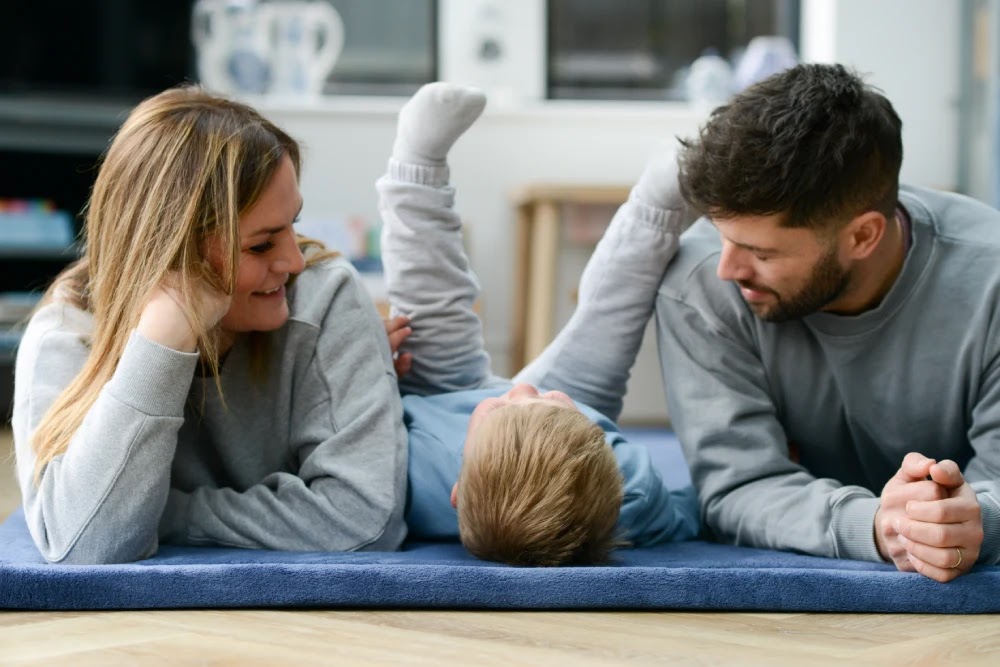
This is less about creating a styled Montessori-inspired room and more about giving your child a predictable place to practise being themselves. Start with the floor, then build gently from there.
Step 1: Clear a small, visible patch of floor
Choose an area where your child can see you and feel part of family life. A corner of the lounge room often works better than an isolated room, especially for babies who are happiest watching ordinary things happen around them.
Move cords, unstable side tables, hot drinks and small objects well out of reach. Your child needs room to roll, crawl, squat and eventually pull to stand without an obstacle course appearing every time they turn around.
Step 2: Create a comfortable base for movement
Cold tiles and hard timber can make floor time feel short-lived, particularly during an Australian winter morning. A cushioned surface makes the area more inviting for your child and more pleasant for you when you inevitably end up sitting beside them.

Picture snack time gone slightly sideways: a splash of yoghurt or a stray dribble of milk on the mat. No panic needed, just grab a cloth and wipe it up quickly. The Momomi Baby Play Mat is designed to blend into your living space rather than look like typical baby gear, giving you a soft, family-friendly surface that stays put in the room. While it's water-resistant on the surface, prompt cleanup matters, since the velvet top can soak up liquids left sitting too long. One thing to keep in mind: it's not machine washable, so it's best to avoid soaking sessions during more adventurous play.
Step 3: Put out only a few invitations to play
Place two or three simple activities where your child can see them. For a baby, that might be a scarf for supervised sensory play, a rattle or a sturdy board book. For a toddler, it could be nesting cups, a small basket of animals or a chunky puzzle.
Leave a little open floor around each item. Empty space is not wasted space. It gives your child room to concentrate, crawl towards what they want and return to an activity without everything becoming one giant pile.
Step 4: Sit nearby and let your child lead
Your job is not to keep the play moving every minute. Sit close, observe and respond when your child asks for help, eye contact or a cuddle. If they repeatedly drop a toy, they may be exploring sound, distance and your reaction, not trying to make extra work for you.
I found it helped to wait a few seconds before stepping in. Often, my child had already worked out a new way to reach the object or turn it around.
Step 5: Rotate activities before the space feels crowded
After a few days, notice what your child returns to and what sits untouched. Pack away the less-loved items and introduce one different activity from your rotation basket. A familiar play space with one small change can feel more interesting than a shelf full of new things.
This is especially useful during rainy school-holiday stretches, when every toy in the house seems to migrate into the living room by 10 am.
Step 6: Reset the area at the end of the day
Invite your toddler to help return one or two things to the basket. It will not look neat every time, and that is fine. The point is that your child begins to see where activities belong and that the room can return to being a family room.
Wipe the floor surface after snacks or messy play, then leave it ready for tomorrow morning. A play space you can reset quickly is the one you will actually keep using.
Choosing the right spot for a Montessori play area
The best Montessori toddler space is usually where life already happens. You do not need to send your child away to play independently while you stand in another room folding washing and wondering why it has gone suspiciously quiet.
Look for natural light, good airflow and a clear view from the kitchen or sofa. In an apartment, place the play area away from balcony doors, tall furniture and busy walkways. If you have older children, give them a simple rule too: this is not the place to race through while their little sibling is on the floor.
A family room can still feel grown-up. Our modular sofa guide has ideas for arranging flexible seating around the real paths people take through a shared room, rather than planning around a perfectly empty floor.
Activities that grow with your child

A Montessori play gym changes as your child changes. You are not building a museum display. You are making a small learning environment at home that follows their movement, curiosity and confidence.
For babies who are lying and rolling
Keep activities close and simple. A safe mirror, a soft book with clear pictures or a lightweight object they can grasp may be plenty. Tummy time and free movement are most useful when your baby is awake, comfortable and actively supervised.
For crawlers and early walkers
Add a low basket of objects they can take out and put back. A sturdy push toy can be useful once your child is ready for it, but there is no need to rush the walking stage. Your child will often spend ages practising the same squat, crawl or side-step.
For toddlers who want to “help”
Put a small cloth in the basket for wiping a low table, or offer a tray with a few large blocks to carry from one spot to another. They may not do the task the way you imagined, but being included in ordinary home life is often more exciting than another flashy toy.
As your child becomes more physical, a low seat can create a nearby reading or drawing spot. You can explore ideas for choosing a kids sofa that suits quiet moments without taking over the whole room.
Newborn play gym setup
Before your baby is chasing the remote across the floor, they may spend a surprising amount of time watching a shape sway gently above them. A simple overhead play gym can work well for supervised awake time in those early months, especially when your baby is lying comfortably on their back and taking in the room around them.
Start small. One or two simple hanging objects within your baby’s view are often plenty, such as a high-contrast shape, a lightweight ring or a soft object that moves a little when they kick. Many babies enjoy watching movement, reaching upward and discovering that their arms and legs can make something happen.
You do not need lights, music and a row of dangling toys competing for attention. A calmer setup can make it easier for your baby to notice one thing at a time, then rest when they have had enough.
Once rolling, scooting or determined floor travel begins, check the setup again. Remove anything your baby can grab, pull or become tangled in, and make more room for the open floor play that suddenly becomes their favorite job.
Making it work in a shared living room

Most of us are not setting up a Montessori room in a spare wing of the house. We are working around the coffee table, the pet’s favourite sunny patch and the pile of school bags by the door.
Try to give each part of the room a loose purpose. The floor space is for movement. A low shelf or basket is for choosing activities. The sofa is for reading, resting and reconnecting after play. It does not have to be rigid, but those gentle boundaries help a room feel less chaotic.
If your child likes climbing onto the lounge to look at books or build a cubby, this guide to a family sofa can help you think through what shared seating needs to handle in everyday life.
Pets deserve a clear place too. A child who knows the dog’s bed or cat’s mat is not part of the play gym has one less confusing boundary to learn. If pets and little ones share your living area, our pet mat article has practical ideas for creating separate cosy zones.
What to look for when buying Montessori furniture and floor pieces
You do not need to buy everything labelled Montessori. Start with the job the item needs to do in your home, then check whether it will make everyday routines easier or create another thing to manoeuvre around.
-
Child-reachable height: Your child should be able to access the item without climbing or calling for help every time.
-
Stable construction: Check that shelves, mirrors and furniture are secure and suitable for your child’s current stage.
-
Easy cleaning: Sticky fingers, sand from the park and crushed crackers are all part of the deal.
-
Enough floor room: A lovely low shelf is not useful if it leaves no space to crawl, sit or stretch out.
-
A place in your home beyond infancy: Choose pieces that can keep working as your child’s interests change.
A mat that stays in your lounge room, rather than being packed away after every play session, can make independent play feel like part of the day instead of a special event. If you are comparing floor options, keep the surface, cleaning routine and the amount of open movement space ahead of colour or trend.
Choosing a play gym frame and materials

A freestanding play gym frame is useful if your baby is still happiest lying beneath a few objects and you have a clear patch of floor for it. A floor-only area may suit a baby who is already rolling and crawling, while a simple DIY setup can be enough if you prefer to use what you already have.
Wooden frames are popular because they tend to look simple in a shared room and can feel sturdy, but wood is not automatically the better choice. You want smooth finishes, stable placement and construction that does not wobble when you gently test it. The frame should sit well away from furniture, cords and busy walking paths.
Hanging toys need the same common-sense check. Make sure attachments are secure, choose objects suitable for your child’s age and take anything down once it no longer suits how they are moving. A baby who has begun reaching, rolling or pulling up can change the rules very quickly.
If a DIY gym feels like another weekend project waiting for you, keep it simple. A clear floor, one safe visual object and your company nearby can still make a lovely little moment together.
Common mistakes to avoid
-
Putting out too much: A full shelf can be overwhelming. Begin with fewer choices and rotate them.
-
Making the area too precious: Your child needs to touch, move, repeat and sometimes make a mess.
-
Expecting independent play immediately: Some children play alone for a while, while others need you close by. Both are normal.
-
Using the floor area for unsupervised sleep: A play space is for awake, supervised movement and exploration, not infant sleep.
-
Forgetting the reset: A small daily tidy keeps the area inviting and stops the whole lounge room becoming the toy basket.
Frequently Asked Questions
What is a Montessori play gym?
A Montessori play gym is a simple, child-level play area that encourages your child to move, choose and explore at their own pace. It usually includes open floor space, a few reachable activities and furniture or storage sized for small hands. You do not need a formal Montessori home environment to use the idea. A calm corner of your living room can do the job beautifully.
What age is a Montessori play gym for?
You can begin a Montessori-inspired play area in the baby stage and adapt it through the toddler years. For babies, the focus is usually supervised floor time, visual interest and free movement. As your child grows, you can add a low basket, accessible books and simple practical activities. The space should follow what your child can safely do now, rather than trying to rush the next milestone.
Do I need a separate Montessori room setup?
No, you do not need a separate room. Many Australian families use one part of the lounge room, bedroom or dining area, especially in apartments and smaller homes. The most helpful feature is not a dedicated room but a predictable space with clear floor area and a few accessible choices. Your child is often happier being near you while still having room to play.
How many toys should be in a Montessori play area?
Two to five activities is a comfortable starting point for many families. Your child may settle more easily when they can see each choice clearly and do not have to dig through a huge pile. Include a mix of movement, sensory play, books and simple problem-solving, then rotate what is available every few days. Watch what your child actually returns to before buying more.
Can a Montessori play gym help my child play independently?
A Montessori play gym can give your child more chances to practise choosing and repeating an activity, but it does not mean they will suddenly play alone for long stretches. Independence develops gradually and looks different from child to child. Staying nearby, noticing their efforts and keeping the setup simple can help your child feel secure enough to explore. You are still their favourite person in the room.
Is a Montessori play mat necessary?
A Montessori play mat is not essential, but a comfortable indoor floor surface can make a play area more welcoming for babies and toddlers. It is especially useful in homes with tiles or timber floors, where you may notice your child prefers a softer place to roll, sit and build. Choose a surface you can clean easily and keep clear around the edges. Adult supervision still matters during all active floor play.
How do I keep a Montessori toddler space tidy?
Keep fewer things out, give each item a home and build a short reset into your evening routine. A basket is often easier than a complicated storage system, especially for toddlers learning to help. Ask your child to return one activity before choosing another, without turning it into a battle. Some days will still end with blocks under the sofa. That is ordinary family life, not a failed setup.
Can I make a DIY Montessori baby play gym?
Yes, you can make a DIY Montessori baby play gym if it is stable, smooth, securely assembled and used only while your baby is awake and supervised. Keep the design simple, with one or two age-suitable objects rather than lots of dangling pieces. Check the attachments before every use and remove the setup once your baby’s movement makes it unsuitable.
Are wooden play gyms better for babies?
Wooden play gyms can be a lovely option, but the material alone does not make one better for your baby. A stable frame, smooth finish, secure hanging objects and careful supervision matter more than whether the frame is wood or another material. Choose the version that fits safely in your home and suits your baby’s current stage.
What should I hang from a Montessori play gym?
Hang one or two simple, lightweight objects that are suitable for your baby’s age and securely attached. Clear shapes, gentle movement and a little visual contrast are often enough for early reaching, kicking and watching. Avoid crowding the frame with lights, sounds or too many objects, then reassess the setup as your baby begins to grab and roll.
When should my baby stop using an overhead play gym?
Your baby should stop using an overhead play gym once it no longer suits how they are moving, especially if they can grab, roll into the frame or pull on hanging objects. Many babies become more interested in open floor space as they begin to travel around the room. Stay nearby during play and adjust the area whenever your baby shows you they need a different kind of space.
Main Points
-
A Montessori play gym works best as a simple, supervised space where your child can move freely and make small choices.
-
You can create a useful Montessori play area in the lounge room, even without a separate nursery or playroom.
-
Open floor space and a few reachable activities are more valuable than filling shelves with toys.
-
Rotate activities, rather than adding more, to keep the space interesting and manageable.
-
A quick daily reset helps the play area remain part of a comfortable family home.
Final Thoughts
The nicest thing about a Montessori play gym is not the shelf, the basket or the carefully chosen toy. It is the small pause it gives you both. Your baby has room to stretch and reach. Your toddler has a place where they can choose something for themselves. You get to sit nearby for a moment and see what captures their attention today.
Some mornings the area will look calm and lovely. Other mornings, it will hold a wooden spoon, a sock, half a puzzle and the family dog watching from a distance. Both count. You are not trying to build a perfect Montessori home. You are making a little more room for your child to practise, play and belong in the everyday rhythm of family life.
If you are shaping a shared space around your child’s changing needs, you will find more gentle home ideas in the Momomi Home Comfort articles.
Every little one is different, so think of this article as a friendly starting point rather than the final word. If you're ever unsure about what's best for your child, your GP, paediatrician or maternal and child health nurse is the best person to ask.


